1. はじめに
This manual provides detailed instructions for the installation, operation, and maintenance of the Aiphone VM-RMVU Residential Fire Alarm Compatible Monitor Security Master Unit. Please read this manual thoroughly before using the product to ensure correct and safe operation. Keep this manual in a safe place for future reference.
2. セットアップとインストール
The Aiphone VM-RMVU unit is designed for wall-mounted installation. Ensure proper power supply and network connections as described below.
2.1外部 View 取り付け
Refer to the diagram below for the external dimensions and mounting details. The unit requires a compatible wall box for installation.

画像1: 外部の view of the Aiphone VM-RMVU unit with detailed mounting dimensions. This diagram illustrates the physical layout, including the location of the power switch, sensors, microphone, speaker, and various indicator lights. It also shows the dimensions for wall-mounted installation.
2.2配線接続
Follow the wiring diagram carefully to connect the master unit to power, entrance units, sub-units, and other security devices. The system supports both wired and wireless LAN connections.
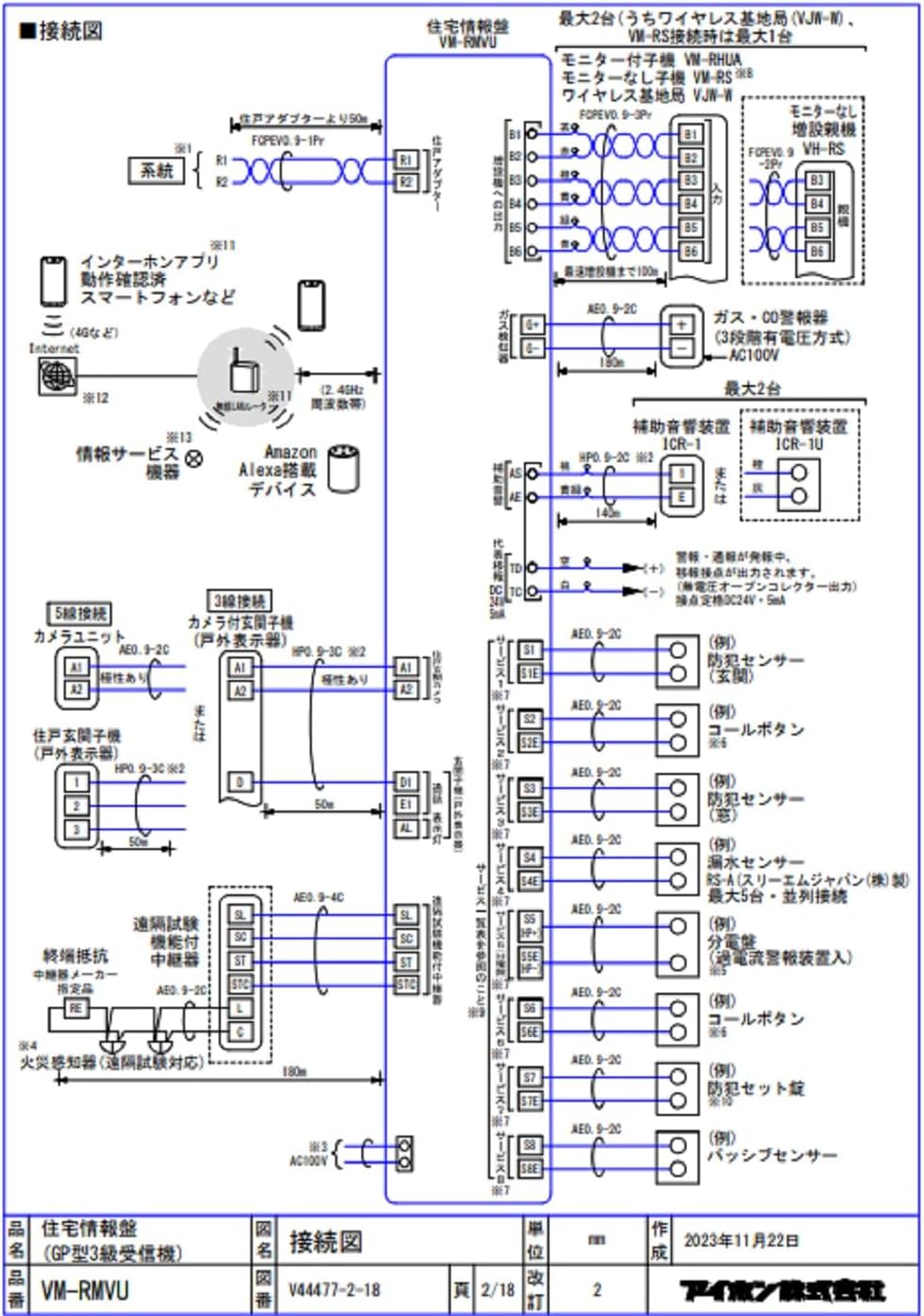
画像2: Comprehensive wiring diagram for the Aiphone VM-RMVU system. This diagram details connections for power, entrance units, monitor sub-units, wireless base stations, extension master units, gas/CO alarms, auxiliary alarm devices, call buttons, security set panels, and passive sensors. It also illustrates connections for internet apps, smartphones, and Amazon Alexa devices via wireless LAN.
電源:
- Connect the unit to an AC100V, 50/60Hz power source.
- Ensure the power switch (located on the rear panel) is in the OFF position before connecting.
ネットワーク接続:
- The VM-RMVU supports wireless LAN (IEEE 802.11b/g/n) for connection to internet apps, smartphones, and Amazon Alexa devices.
- Refer to the separate wireless LAN setup guide for detailed configuration instructions.
3. 操作手順
The Aiphone VM-RMVU features a 7-inch TFT LCD touch panel and intuitive buttons for various functions.

画像3: Front panel of the Aiphone VM-RMVU showing the 7-inch LCD display and control buttons. Key buttons include EMERGENCY, POWER indicator, TALK, OFF, OPEN, and ALARM STOP. The model name 'AIPHONE VM-RMVU' is also visible below the screen.
3.1 基本機能
- 電源オン/オフ: Press the power switch on the rear panel to turn the unit on or off. The green POWER indicator will illuminate when on.
- 電話に出る: When an entrance unit calls, the display will show the caller. Press the 話す button to initiate a simultaneous call. The green TALK indicator will light up.
- 通話の終了: を押す オフ button to end a call. The red OFF indicator will light up briefly.
- ドアを開ける: 通話中に を押す 開ける button to unlock the connected door. The green OPEN indicator will light up.
3.2 Security and Alarm Functions
- 非常ボタン: を押す 緊急 button in case of an emergency to trigger an alarm.
- Alarm Stop: If an alarm sounds (e.g., fire, gas, security alert), press the アラームストップ button to silence it. The red ALARM STOP indicator will light up when an alarm is active.
- Security Display: The security display unit provides visual indicators for Fire, Gas, and Security Alert statuses.
3.3 Touch Panel Operation
The 7-inch TFT LCD is a touch panel. Navigate through menus and settings by tapping on the screen icons and options. Refer to the on-screen guide for specific menu functions.
4. メンテナンス
Regular maintenance ensures the longevity and optimal performance of your Aiphone VM-RMVU unit.
- クリーニング: Use a soft, dry cloth to clean the unit's surface and display. Do not use abrasive cleaners or solvents.
- 検査: Periodically check all connections for security and ensure no cables are damaged.
- ソフトウェアアップデート: メーカーの website for any available firmware updates to ensure your unit has the latest features and security enhancements.
5。 トラブルシューティング
If you encounter issues with your Aiphone VM-RMVU unit, refer to the following common troubleshooting steps:
- 電源なし: Ensure the power cable is securely connected and the power switch on the rear panel is ON. Check your circuit breaker.
- ビデオ/オーディオなし: Verify all wiring connections to entrance units and sub-units. Ensure network connectivity for wireless functions.
- Alarm Malfunction: Check the status indicators on the security display unit. If the issue persists, contact customer support.
- タッチパネルが反応しない: Try restarting the unit by turning the power off and on. If the problem continues, contact support.
For more complex issues, please consult a qualified technician or Aiphone customer support.
6. 仕様
| 特徴 | 仕様 |
|---|---|
| ブランド | アイホン |
| モデル番号 | VM-RMVU |
| パワーVoltage | AC100V: 50/60Hz |
| 消費電力 | Standby 6W: Max 17W |
| メソッドの呼び出し | Simultaneous Call Method |
| 画面 | 7-inch TFT LCD Display (Touch Panel) |
| ピクセル数 | 約1.15万画素 |
| 無線LAN | IEEE 802.11b/g/n (2.4GHz) |
| 製品寸法(長さx幅x高さ) | 18 x 22 x 4.5 cm |
| 重さ | 約880g |
| 動作周囲温度 | 0~40℃ |
| 含まれるコンポーネント | 本体 |
7. 保証とサポート
For warranty information, technical support, or service inquiries, please refer to the official Aiphone website or contact your local Aiphone distributor. Keep your purchase receipt as proof of purchase.
アイホン公式 Webサイト: www.aiphone.com


