
Stemedu ESP32-2432S028R
ESP32-2432S028R 2.8-inch TFT LCD Display User Manual
Model: ESP32-2432S028R | Brand: Stemedu
1. はじめに
This manual provides comprehensive instructions for the Stemedu ESP32-2432S028R 2.8-inch TFT LCD Display module. This development board integrates a low-power dual-core 32-bit CPU with Bluetooth and WiFi capabilities, making it suitable for a wide range of embedded applications, including IoT projects, sensor experiments, and mobile control systems.
1.1. 箱の中身
- 1 x ESP32-2432S028R 2.8-inch TFT LCD Display Module
- 1 x Touch Pen (color may vary)
- マイクロUSBケーブル1本
- 1 x Jumper Wire Set

Image 1.1: The package contents include the ESP32-2432S028R module, a touch pen, a Micro USB cable, and jumper wires.
2. 主な特徴
- Low-power dual-core 32-bit CPU, with integrated Bluetooth and WIFI dual-core processor.
- Equipped with 520 KB SRAM and 32Mbit SPI Flash.
- Features an ILI9341 drive chip for the TFT LCD display.
- Supports various interfaces including UART, SPI, I2C, and PWM (up to 2Mbps).
- Includes a TF card slot, supporting up to 4GB storage.
- Compatible with popular development environments such as Arduino IDE, Micropython, Mixly, and ESP IDE.
3. 技術仕様
| 仕様 | 価値 |
|---|---|
| プロセッサ | Dual-core 32-bit CPU (240 MHz) |
| ラム | 520KBのSRAM |
| フラッシュメモリ | 32Mbit SPI Flash |
| ワイヤレス接続 | Bluetooth、WiFi |
| 表示サイズ | 2.8インチ |
| ディスプレイ解像度 | 240 x 320 ピクセル |
| ディスプレイドライバー | ILI9341 |
| タッチタイプ | 抵抗タッチ |
| サポートされているインターフェース | UART, SPI, I2C, PWM (2Mbps) |
| 外部ストレージ | TF card slot (max 4GB) |
| オペレーティング·システム | FreeRTOS with LwIP |
| 電源入力 | マイクロUSB |
| 寸法 | 約4.76×3.15×1.18インチ |
| 重さ | 約3.52オンス |

画像3.1: トップダウン view of the ESP32-2432S028R board, highlighting key components and interfaces like the ESP-WROOM-32 module, TF card slot, and USB ports.
4. Setup and Initial Power-On
To begin using your ESP32-2432S028R module, connect it to a power source using the provided Micro USB cable. The module can be powered directly from a computer's USB port or a compatible USB power adapter.
Video 4.1: Demonstration of powering on the ESP32-2432S028R module via Micro USB and initial display functionality, including touch interaction with various UI elements like buttons, charts, and selectors.
Upon successful power-on, the display will illuminate, and a default interface or boot screen will appear. The resistive touchscreen allows for interaction using the included touch pen or a suitable stylus.
5. Basic Operation and Touch Interface
The 2.8-inch TFT LCD features a resistive touch screen, enabling user interaction with on-screen elements. Use the provided touch pen for precise input. The display supports various graphical user interface (GUI) elements, which can be programmed and customized.

Image 5.1: The touchscreen interface showing examples of interactive elements such as buttons, keyboards, sliders, and dialog boxes.
The video in Section 4.1 also demonstrates the responsiveness of the touch interface, showcasing navigation through different control types, visual displays, and selectors like calendars and dropdown menus.
6. プログラミングと開発
The ESP32-2432S028R is designed for flexible development and supports multiple programming environments. This allows users to develop custom applications and interfaces for the module.
6.1. Supported Development Environments
- Arduino IDE: A popular open-source electronics platform for writing code and uploading it to the board.
- マイクロパイソン: マイクロコントローラ上で実行するように最適化された Python 3 プログラミング言語の無駄のない効率的な実装。
- ミックスリー: A graphical programming environment based on Blockly, suitable for beginners.
- ESP IDE: Espressif's official Integrated Development Environment for ESP32 series chips.
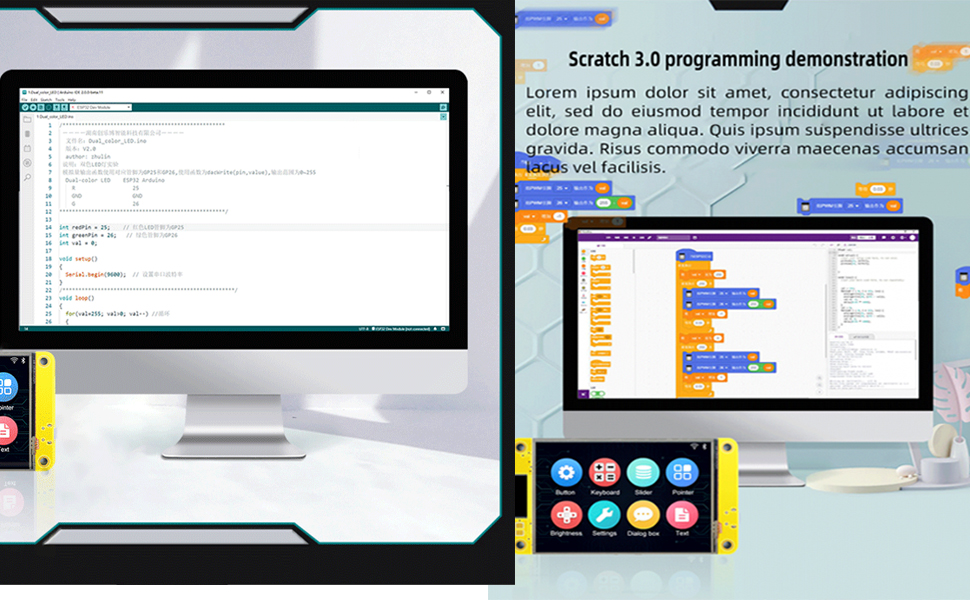
図6.1: 例ample of a graphical programming interface, such as Scratch 3.0, being used to program the ESP32 module.
6.2. Uploading Code to the Board
Code can be uploaded to the ESP32-2432S028R board using either the Arduino IDE or the Espressif Download Tool. Ensure the correct drivers are installed for your operating system to recognize the board's serial port.

Image 6.2: Visual guide demonstrating the two primary methods for uploading firmware: via Arduino IDE and using the Espressif Download Tool, including driver installation notes.
For detailed programming guides and sample code, refer to the official documentation provided by Stemedu or the respective development environment communities.
7。 トラブルシューティング
- ディスプレイの電源が入らない: Ensure the Micro USB cable is securely connected to both the module and a working power source. Try a different USB cable or power adapter.
- タッチレスポンスなし: Verify that the display is properly initialized in your code. For resistive touchscreens, ensure the touch pen is making firm contact.
- アップロードエラー: Check that the correct COM port is selected in your IDE/tool and that the necessary drivers (e.g., CH340 driver) are installed. Ensure the board is in bootloader mode if required by your upload method.
- WiFi/Bluetooth 接続の問題: Confirm that your code correctly initializes and configures the WiFi or Bluetooth module. Check for proper antenna connection if applicable.
8. お手入れとメンテナンス
- 取り扱い: 敏感な電子部品に触れないように、モジュールの端を持って取り扱ってください。
- クリーニング: Use a soft, dry, lint-free cloth to clean the display surface. Avoid abrasive cleaners or solvents.
- ストレージ: Store the module in a cool, dry environment, away from direct sunlight and extreme temperatures.
- 保護: Protect the display from scratches and impacts. Avoid applying excessive pressure to the screen.
9. 保証情報
Specific warranty details for the Stemedu ESP32-2432S028R module are typically provided at the point of purchase or on the manufacturer's official website. Please retain your proof of purchase for any warranty claims. For general warranty inquiries, contact Stemedu customer support.
10. カスタマーサポート
For technical assistance, troubleshooting, or further information regarding your ESP32-2432S028R module, please visit the official Stemedu website or contact their customer support team. Online resources, forums, and community support may also be available for ESP32 development boards.
Stemedu Official Store: ストアを訪問